
Health & Fitness
Hashimoto's Disease and Fitness: How to Exercise With Hypothyroidism, Fatigue, Weight Changes and Realistic Expectations
Hashimoto's disease is an autoimmune condition in which the immune system attacks the thyroid gland. Over time, that inflammation can damage the thyroid and reduce its ability to produce enough thyroid hormone.
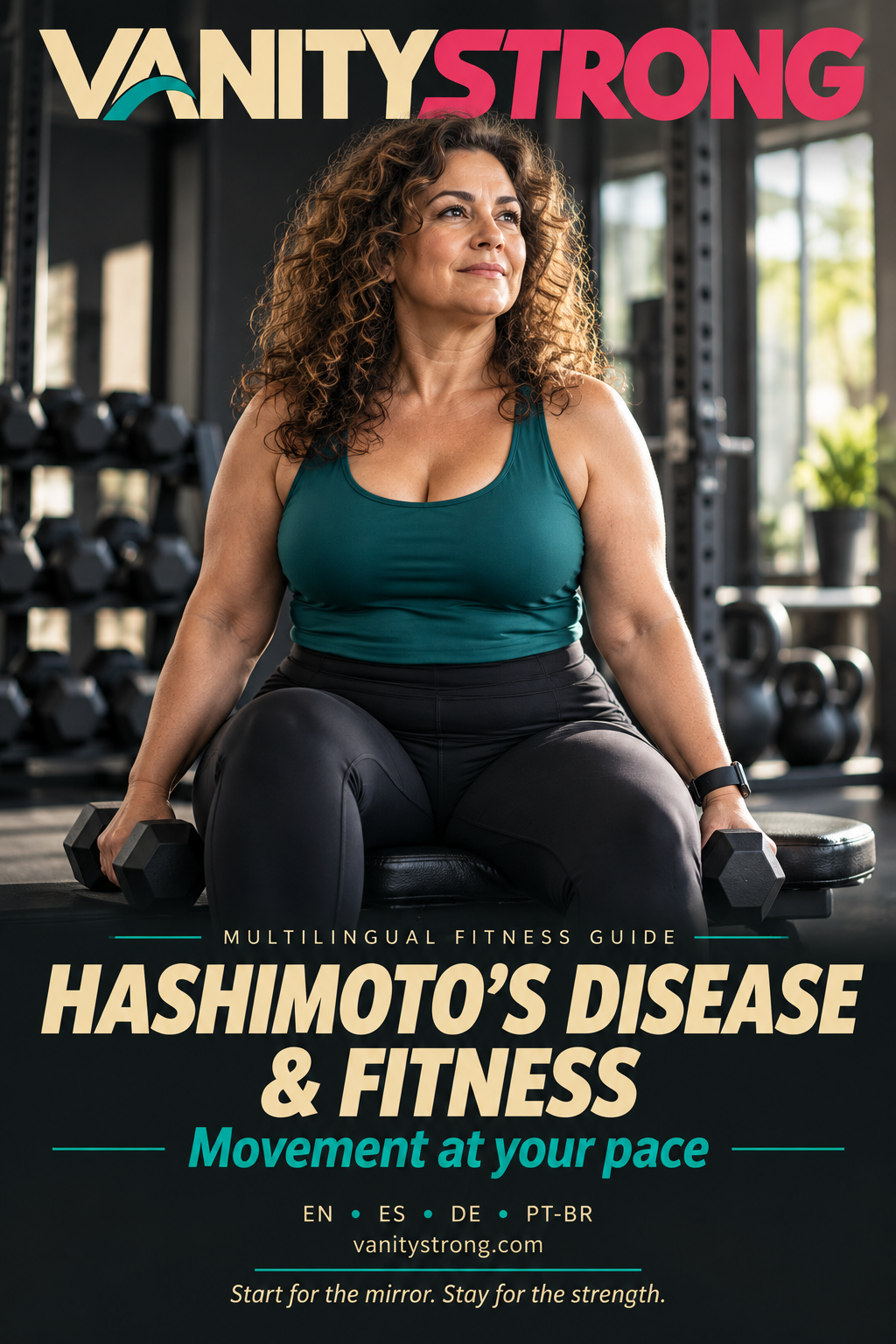
English, Spanish, German and Brazilian Portuguese in one file.
Hashimoto's disease is an autoimmune condition in which the immune system attacks the thyroid gland. Over time, that inflammation can damage the thyroid and reduce its ability to produce enough thyroid hormone.
In the United States, Hashimoto's thyroiditis is the most common cause of hypothyroidism.
That matters for fitness because thyroid hormones help regulate many functions related to energy use, temperature and normal function of the brain, heart and muscles.
When thyroid hormone levels are too low, people may experience fatigue, weight gain, cold sensitivity, constipation, depression, muscle aches and difficulty exercising.
But Hashimoto's does not mean exercise is forbidden.
It means the medical condition and the exercise plan should not be confused with each other.
First: Hashimoto's is not diagnosed by a workout
Symptoms alone are not enough to diagnose Hashimoto's.
Diagnosis can involve medical history, physical examination and blood tests, including TSH, thyroid hormones and thyroid antibodies. Some people have thyroid antibodies while thyroid hormone levels remain normal. Others develop clinical hypothyroidism and need thyroid hormone replacement.
A fitness program should never replace thyroid testing or treatment.
Exercise is not a treatment for thyroid hormone deficiency
This distinction protects people from a lot of bad advice.
Exercise may improve fitness, strength, cardiovascular health, function and general well-being.
It does not replace levothyroxine when thyroid hormone replacement is medically indicated.
According to the American Thyroid Association, people with clinical hypothyroidism caused by Hashimoto's are generally treated with thyroid hormone replacement, usually levothyroxine, with dosing adjusted according to thyroid levels.
Why exercise tolerance may feel different
Someone whose hypothyroidism is not yet well controlled may experience unusual fatigue, muscle aches, weakness or reduced exercise tolerance.
That does not mean the person lacks discipline.
It also does not mean that every tired day is caused by the thyroid.
Sleep, anemia, depression, calorie intake, medications, stress, other autoimmune conditions and many other factors can affect energy.
This is exactly why persistent or severe symptoms deserve medical evaluation rather than internet diagnosis.
Strength training can still be useful
When medically stable and able to exercise safely, strength training can be part of a normal fitness program.
Start from your actual capacity.
If you are rebuilding after a long period of fatigue, two moderate full-body sessions may be more appropriate than a six-day bodybuilding split.
Use movements you can perform consistently: squats or chair stands, hip hinges, presses, rows, step-ups, carries and core-stability exercises.
Progress can be slow.
Slow progress is still progress.
Cardio should not become punishment
People frustrated by weight changes sometimes respond by adding more and more cardio.
That can backfire if fatigue is already high.
Walking, cycling, swimming or other moderate cardio can be valuable. But the best dose is the one you can recover from.
Public-health guidelines still provide a long-term target of roughly 150-300 minutes of moderate aerobic activity and two days of strength work for adults, but inactive people are specifically encouraged to start with smaller amounts and build gradually.
Hashimoto's and weight loss
Hashimoto's can contribute to hypothyroidism, and hypothyroidism can be associated with weight gain.
But thyroid disease does not make every change in body weight a thyroid problem.
Body weight reflects many interacting factors.
Treating hypothyroidism appropriately is a medical priority. After that, changes in nutrition, daily activity, exercise, sleep and behavior still matter.
Fitness marketing becomes dangerous when it promises to 'heal Hashimoto's,' 'reset your thyroid,' or 'switch your metabolism back on.'
VanityStrong should not make those claims.
What about very intense training?
Intensity is not inherently bad.
The question is whether the person is medically stable, conditioned for it and recovering appropriately.
A trained person with well-managed Hashimoto's may tolerate vigorous exercise perfectly well.
Someone with significant untreated hypothyroid symptoms may need a slower progression.
Exercise programming should respond to the person - not the label.
A practical starting week
A cautious beginner might perform two full-body strength sessions, three 20-30 minute walks and light mobility on other days.
After several weeks, duration or resistance can gradually increase.
A more experienced person might lift three times weekly and perform two or three cardio sessions.
There is no 'Hashimoto workout.'
There is only intelligent training adjusted to current capacity.
When to get medical guidance first
Talk with a healthcare professional when symptoms are new, severe or unexplained; thyroid treatment has recently changed; exercise produces unusual palpitations, fainting, severe shortness of breath or chest symptoms; pregnancy is involved; or another significant condition affects exercise safety.
People with chronic conditions can often exercise safely, but plans sometimes need modification.
The useful goal
Hashimoto's may affect the route.
It does not have to become your identity.
Fitness can still be about getting stronger, walking farther, feeling more capable, maintaining muscle, improving conditioning or changing how your body looks.
The useful approach is neither "your condition changes nothing" nor "your thyroid controls everything."
It is: treat the medical condition properly, train from the body you have today, and build from there.
Sources & further reading
These references support the health and physical-activity statements in this article. No source endorses VanityStrong, its products, or its programs.
- American Thyroid Association - Hashimoto's Thyroiditis — https://www.thyroid.org/hashimotos-thyroiditis/
- NIDDK - Hashimoto's Disease — https://www.niddk.nih.gov/health-information/endocrine-diseases/hashimotos-disease
- U.S. Office of Disease Prevention and Health Promotion - Physical Activity Guidelines Q&A — https://odphp.health.gov/our-work/nutrition-physical-activity/physical-activity-guidelines/about-physical-activity-guidelines/questions-answers
- National Institute on Aging - Exercising With Chronic Conditions — https://www.nia.nih.gov/health/exercise-and-physical-activity/exercising-chronic-conditions
Your next step
VanityStrong next step: use the Fit Quiz to identify an appropriate starting point. If fatigue or a medical condition affects your exercise capacity, choose the gentler lane and adjust with your healthcare professional when needed.
Not medical advice. VanityStrong provides fitness and general wellness education. It does not diagnose, treat or replace care from a qualified healthcare professional. If you are pregnant, managing a medical condition, or unsure whether exercise is appropriate for you, talk to your doctor first.